IT professionals, cybersecurity enthusiasts, law enforcement personnel, and anyone interested in digital forensics and cybercrime investigation.


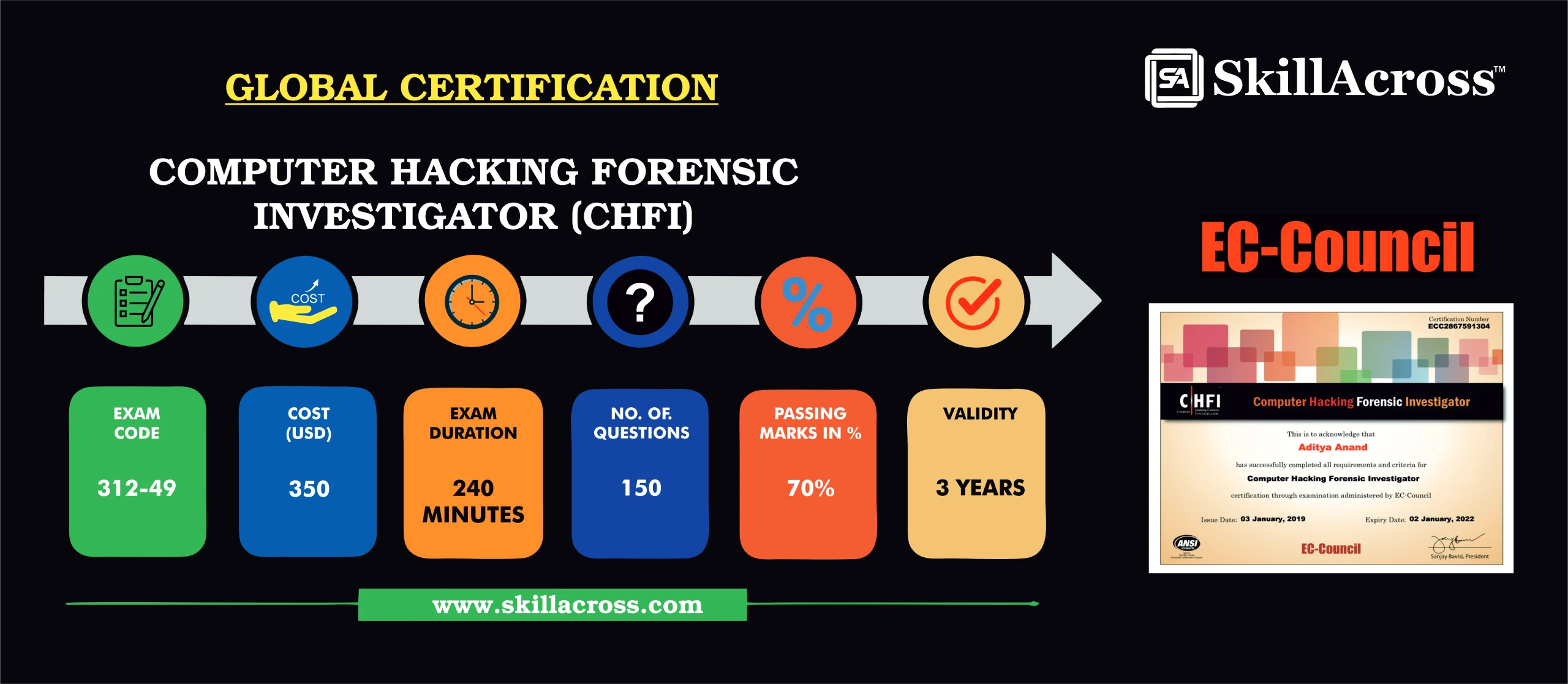







(Depending on Experience & Location)
Fundamentals of digital forensics Types of cybercrime Roles and responsibilities of a forensic investigator
Evidence identification, collection, and preservation Chain of custody management Forensic investigation workflow
Capturing and analyzing network traffic Investigating intrusion and malware propagation Monitoring suspicious activity and network breaches
Disk imaging and cloning Capturing volatile data and memory Maintaining chain of custody
Maintaining chain of custody Email and Internet Forensics Labs Tracing email headers and attachments Investigating web browsing history and social media activity
nvestigating cloud storage accounts Retrieving evidence from cloud applications Understanding forensic challenges in cloud environments
Effective learning starts with assessment. Learning a new skill is hard work. SkillAcross makes it easier.
