
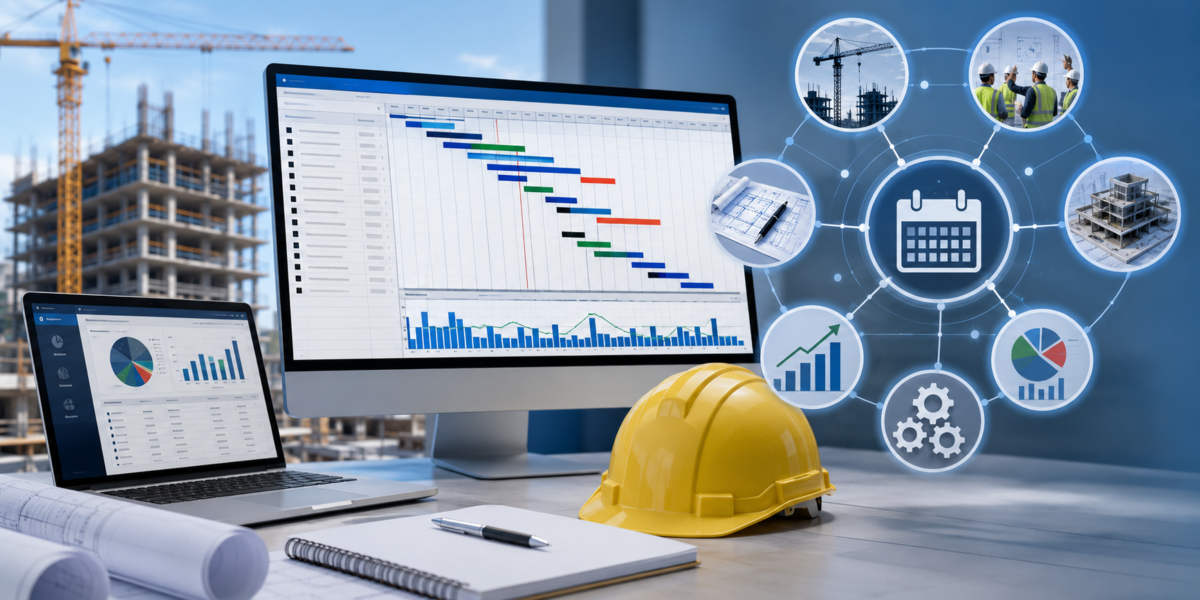
What Is Primavera P6 and Why Do Planning Engineers Use It?
Introduction
Oracle defines Primavera P6 EPPM as an integrated solution for prioritizing, planning, managing, and executing projects, programs, and portfolios. Primavera P6 is a professional project planning, scheduling, and control software that is widely used in construction, oil and gas, infrastructure, manufacturing, and engineering projects. Planning engineers use Primavera P6 because it helps them create detailed project schedules, assign resources, track progress, identify delays, and manage project timelines more effectively.
What Is Primavera P6?
Project management software Primavera P6 is intended to manage small, medium, and large-scale projects. Planning engineers can use it to divide a project into tasks, make schedules, establish connections, establish benchmarks, and track the project’s advancement. Projects with several tasks, teams, contractors, and deadlines benefit greatly from the software. Work breakdown structures, resource leveling, critical path method scheduling, and resource and cost management are all supported by Primavera P6 Professional.
Why Planning Engineers Use Primavera P6
Primavera P6 is used by planning engineers because it provides them with better control over project schedules and progress. In large projects, manual planning or simple spreadsheets are insufficient to manage thousands of activities. Primavera P6 helps engineers organize activities in a structured format and understand which tasks are critical for project completion, which makes it easier to avoid delays and take corrective action at the right time. One of Primavera P6’s primary uses is the creation of detailed project schedules. Planning engineers can divide the project into activities, assign durations, set start and finish dates, and link tasks based on execution sequence.
Helps Create Detailed Project Schedules
Making thorough project schedules is one of Primavera P6’s primary applications. Planning engineers can divide the project into activities, assign durations, set start and finish dates, and link tasks based on execution sequence. This helps the project team understand what work needs to happen, when it should happen, and which activities depend on others. A detailed timeline enhances collaboration between site crews, contractors, suppliers, and management.
Supports Critical Path Method Scheduling
Primavera P6’s support for Critical Path Method scheduling makes it popular. The tasks that have a direct impact on the project’s completion deadline are displayed on the critical route. The project as a whole may be delayed if any crucial tasks are postponed. This tool helps planning engineers locate and keep a close eye on high-priority projects. This lowers schedule risks and helps project managers concentrate on the most crucial tasks.
Improves Resource Planning
Primavera P6 is also used by planning engineers to manage project resources, including labor, supplies, equipment, and machinery. The program assists in allocating resources to tasks and detecting resource shortages or overallocations. This is helpful in engineering and construction projects because progress is directly impacted by the availability of resources. Effective resource planning promotes better project execution, increases productivity, and decreases idle time.
Helps Track Project Progress
Planning engineers can update real progress and compare it with the anticipated timeline using Primavera P6. This enables them to determine if the project is on schedule, ahead of schedule, or behind schedule. Weekly and monthly report preparation need regular progress updates. Planning engineers can identify problems early and facilitate improved decision-making by monitoring projected versus actual progress.
Supports Cost and Schedule Control
To keep an eye on time and expenses, planning engineers frequently collaborate closely with project management teams. Teams may better understand how delays can impact budgets and predictions by using Primavera P6’s support for cost and schedule-related planning. Primavera’s integrated cost and schedule management, according to Oracle, enhances forecast and budget accuracy, tracks progress, and illustrates the effects of schedule and cost changes.
Useful for Reporting and Management Review
Primavera P6 assists planning engineers in creating management dashboards, lookahead schedules, project reports, progress summaries, and delay analyses. Project managers and stakeholders can better grasp the present state of the project with the aid of these reports. Primavera P6 offers formal project data rather than just verbal updates. This increases openness and boosts the efficiency of project review meetings.
Helps Manage Large and Complex Projects
Many departments, phases, work packages, and contractors are frequently involved in large projects. Primavera P6 is made to handle enterprise-level scheduling and multi-project planning. According to Oracle documentation, P6 Professional is all-inclusive multiproject planning and control software designed for enterprise-wide project management scalability. For planning engineers working on building, industrial, and infrastructure projects, this makes it useful.
Why Primavera P6 Is Important for Planning Engineer Careers
Since many employers want candidates to be familiar with project scheduling software, Primavera P6 is one of the most crucial tools for planning engineers. Applications for positions including Planning Engineer, Project Scheduler, Project Control Engineer, Planning Coordinator, and Project Management Executive are open to engineers who are familiar with Primavera P6. Proficiency in Excel, construction sequence, project reporting, and site coordination can enhance employment prospects in addition to Primavera P6.
Conclusion
Primavera P6 is a crucial tool for planning engineers since it facilitates the organized management of project schedules, resources, progress, costs, and reporting. It is particularly helpful for complicated projects where timely tracking and careful planning are essential to their effective completion. Planning engineers can enhance their technical abilities, facilitate improved project execution, and create solid career prospects in the building, infrastructure, oil and gas, manufacturing, and engineering sectors by mastering Primavera P6.
Frequently Asked Questions
What is Primavera P6 used for?
Primavera P6 is used for project planning, scheduling, resource management, progress tracking, cost control, and project reporting.
Why do planning engineers use Primavera P6?
Planning engineers use Primavera P6 to create detailed schedules, track progress, identify delays, manage resources, and prepare project reports.
Is Primavera P6 useful for freshers?
Yes, Primavera P6 is useful for freshers who want to start a career as a Planning Engineer, Project Scheduler, or Project Control Engineer.
Which industries use Primavera P6?
Primavera P6 is commonly used in construction, oil and gas, infrastructure, manufacturing, power plants, engineering, and large industrial projects.
What skills should I learn with Primavera P6?
Along with Primavera P6, you should learn Excel, project scheduling basics, critical path method, resource planning, progress reporting, and construction sequence knowledge.
