
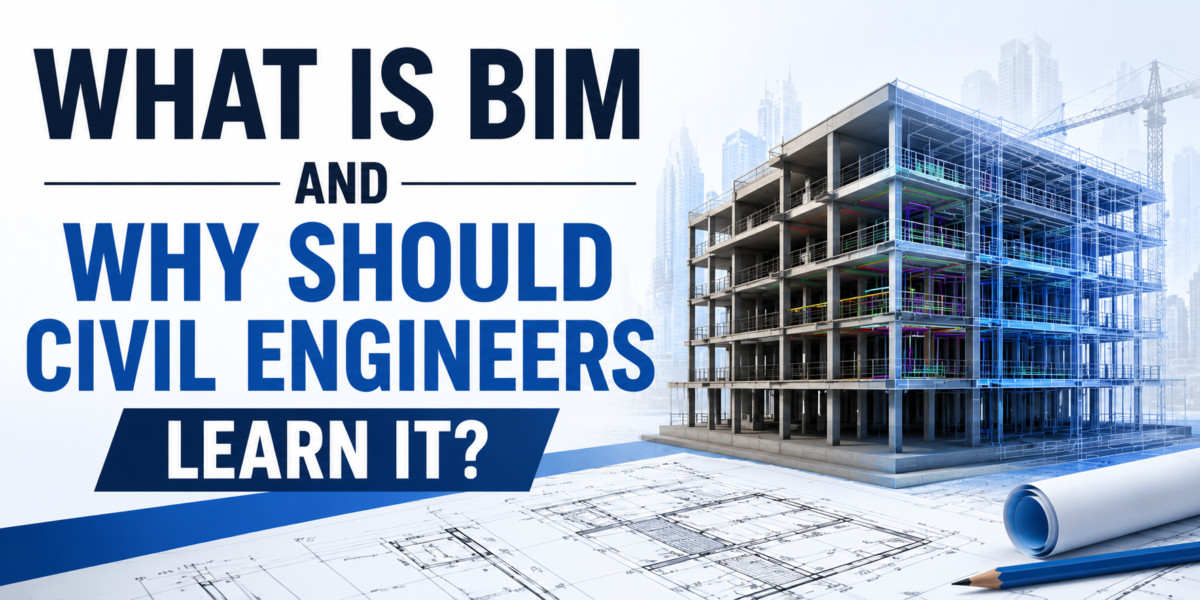
What Is BIM and Why Should Civil Engineers Learn It?
Introduction
Building Information Modeling (BIM) is one of the most important technologies that is transforming the construction and civil engineering industry. BIM is a digital process that helps engineers, architects and construction professionals create intelligent 3D models for planning, designing, constructing and managing infrastructure projects. Unlike traditional 2D drawings, BIM offers detailed visual and data-driven models that enhance coordination, reduce errors and support better project management.
Many construction firms and infrastructure organizations are looking for specialists with BIM skills today. Today’s projects are characterized by advanced digital workflows, as well as better collaboration between teams. Learning BIM is becoming a must for civil engineers not only for improving technical knowledge but also for building strong career opportunities in the changing construction industry.
What Is BIM?
BIM is an acronym for Building Information Modeling. It is a smart digital process of modeling to generate and manage information about buildings and infrastructure projects throughout their life cycle.
BIM combines 3D design with key project data, including dimensions, materials, costs, schedules and structural details. This allows project teams to better visualize projects and make better decisions in the planning and construction phases.
BIM is applied in residential, commercial, industrial and infrastructure projects to improve coordination between architects, engineers, contractors and project managers.
How BIM Is Different from Traditional Drafting
Traditional drafting is primarily concerned with 2D drawings and this can lead to conflicts in design and communication issues between teams. BIM is not just drafting, it is the development of intelligent 3D models that contain visual and technical information.
Any changes made in a BIM model automatically update the entire project data in all associated drawings and views. This leads to less manual work and fewer errors in the execution of the project.
Teams can also use BIM to identify clashes between structural, architectural and MEP systems prior to construction, saving time and money.
Why Civil Engineers Should Learn BIM
Civil engineers are involved in the planning, design and management of construction projects. Learning BIM helps civil engineers become more productive and improve project coordination.
The BIM capabilities help engineers in making accurate models, understanding the project visualization better, tracking the construction process, and improving collaboration with other departments. It also reduces material waste, design errors and delays in project completion.
As the use of digital construction methods increases by many companies, BIM has become a very valuable skill in the civil engineering industry .
Improves Project Planning and Coordination
One of the major benefits of BIM is improved project coordination. Big construction projects need lots of teams to work together. These teams can include architects, structural engineers, MEP engineers, contractors and consultants.
BIM enables all teams to work on a common digital model minimizing communication gaps and improving collaboration. Engineers can detect design conflicts early and solve problems before construction begins.
Better coordination means smoother workflows, less rework and faster project completion.
Enhances Career Opportunities
The construction, infrastructure, real estate and engineering companies have a very high demand for BIM professionals. Civil engineers with BIM skills often have better career opportunities and salaries than their colleagues with traditional drafting skills only.
Many organizations now look for candidates with a proficiency in software such as Autodesk Revit, Navisworks, Civil 3D and BIM coordination tools. BIM skills mean opportunities in international projects and advanced infrastructure developments.
Learning BIM helps civil engineers to remain competitive in the modern engineering industry.
Supports Cost and Time Management
BIM reduces project inefficiency by improving the cost estimation and scheduling. Engineers can use the BIM models to calculate material quantity, estimate project costs and keep track of timelines in a more accurate manner.
This helps to reduce unnecessary costs, avoid delays and better manage resources. BIM also allows for 4D and 5D modeling in which time and cost data are directly integrated into the project model.
Improved project control leading to increased productivity and better financial management.
Better Visualization and Client Presentation
BIM enables engineers and clients to visualize the projects clearly before the construction work starts. The clients can visualize the layout, design and structure of the project in a more realistic way through 3D models.
Better visualization leads to fewer misunderstandings and more confident decision-making by clients. BIM models and walkthroughs also help civil engineers to communicate project progress more professionally.
Essential BIM Software for Civil Engineers
Civil engineers commonly use several BIM-related software tools depending on project requirements. Some of the most popular BIM software includes:
- Autodesk Revit
- Civil 3D
- Navisworks
- BIM 360
- Tekla Structures
- ArchiCAD
Learning these tools improves technical expertise and increases job opportunities in engineering and construction companies.
Conclusion
BIM is changing the future of civil engineering and construction by improving project visualization, coordination, efficiency and decision making. BIM is no longer an extra skill for civil engineers. It has become a core component of modern engineering practice.
With the growing demand for digital construction technologies, BIM skills can help civil engineers enhance career prospects, improve productivity and contribute to smarter and more efficient infrastructure projects. Engineers who learn BIM now will be well positioned for the future of the construction industry.
FAQs
What is BIM in civil engineering?
BIM stands for Building Information Modeling, a digital process used for designing, planning, and managing construction projects.
Why should civil engineers learn BIM?
BIM improves project coordination, visualization, efficiency, and career opportunities in the construction industry.
Which software is used in BIM?
Popular BIM software includes Revit, Civil 3D, Navisworks, Tekla Structures, and BIM 360.
Is BIM useful for construction projects?
Yes, BIM helps reduce errors, improve collaboration, manage costs, and streamline project execution.
Does BIM improve job opportunities for civil engineers?
Yes, many construction and infrastructure companies prefer professionals with BIM skills because of growing digital transformation in the industry.
